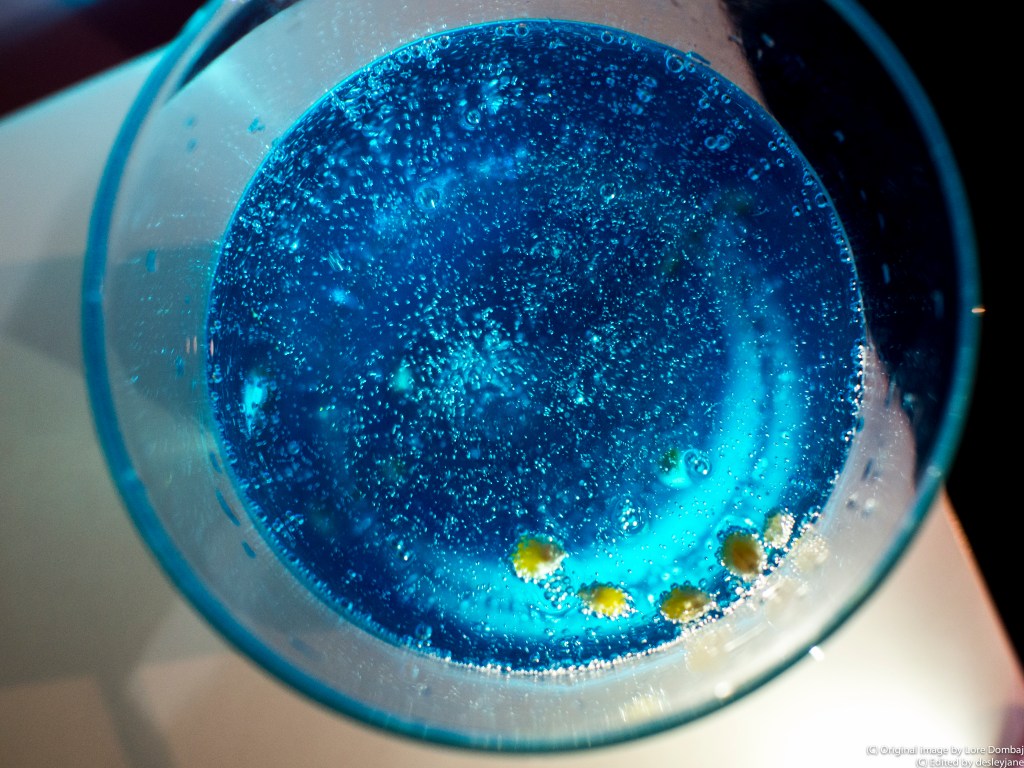

For today’s experiment, you can have a lot of fun and you can make a lot of mess. I had fun working out the best things to use here. The original experiment that I remember from when I was at school, used sultanas. The book that I wrote a chapter for said to use spaghetti. Neither of those worked very well this time around. After much experimentation, I found that popcorn works really well! Anyway, I digress, let’s dive in and see what this is all about. We are doing a chemical reaction today, creating bubbles and causing objects to dance within a liquid!
What will you need?
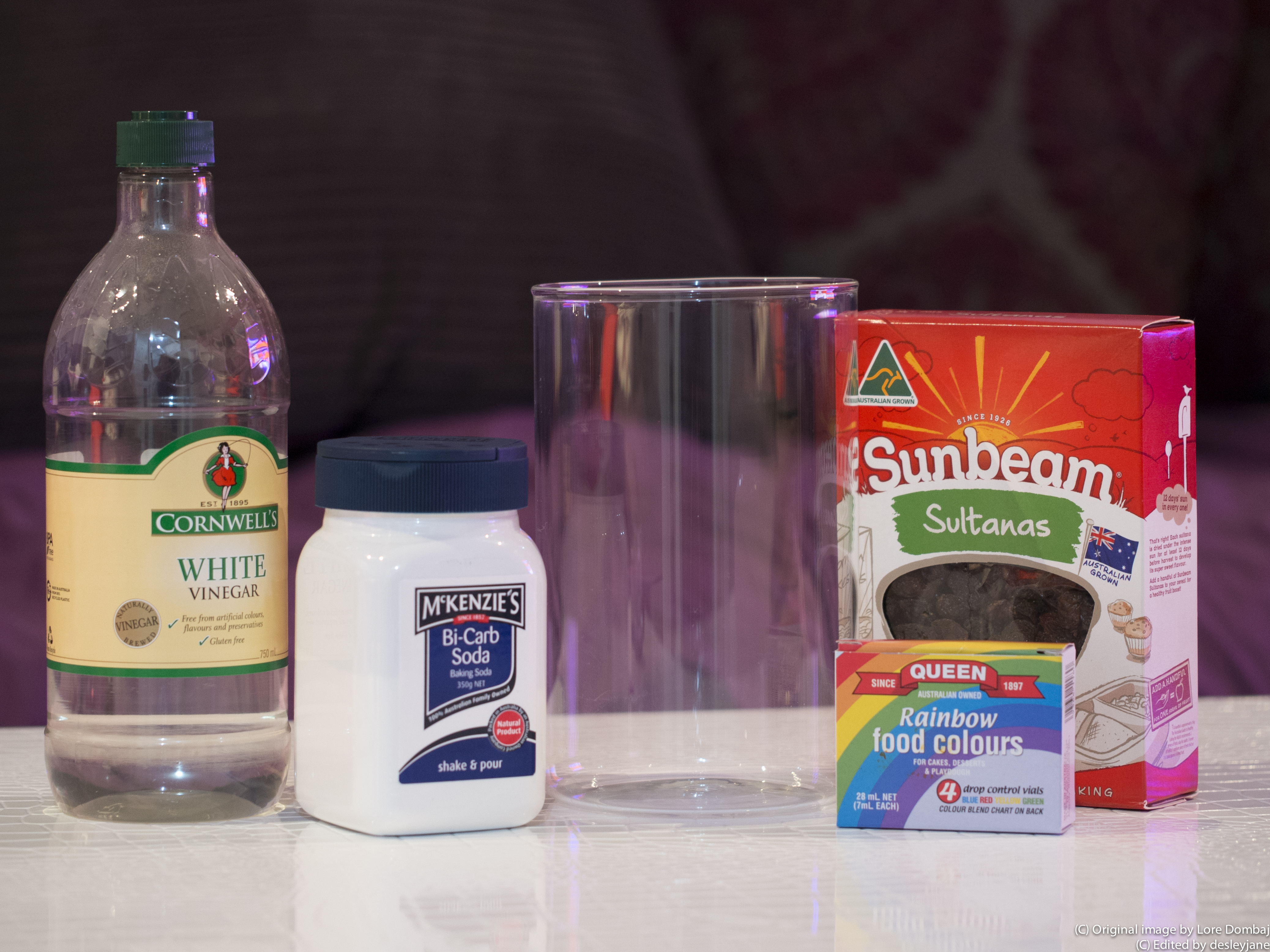
- vinegar
- bicarbonate of soda
- large glass
- food colouring (if you wish)
- something to dance – I’ve shown sultanas here, but I think that Aussie sultanas are too plump! Popcorn kernels work very well.
What will you do?


- Fill the jar or glass with water to about 3/4 full.
- Add 3 tablespoons of bicarbonate of soda.
- Add a few drops of food colouring, if you wish.
- Drop in 5 or 6 popcorn kernels (or whatever you choose for dancing).
- Carefully add 3 tablespoons of vinegar.
- Sit back and watch!
This video was taken with my iPhone using the time-lapse setting.
What will you learn?
The bicarbonate of soda and the vinegar react to release carbon dioxide gas. As the tiny gas bubbles form, they attach to the popcorn. The carbon dioxide is less dense (lighter) than the water, so once there are enough bubbles on the kernel, the bubbles lift the kernel to the surface.
Once the kernel reaches the surface, the bubbles on top of the kernel burst, releasing the carbon dioxide to the air, and the popcorn will turn over. Then, the remaining bubbles on the kernel will burst. Now, the kernel doesn’t have any bubbles holding it up, it sinks back to the bottom. More bubbles attach themselves to the kernel and they rise again, and keep on dancing until the reaction is over!


Hints and Tips.
- Be careful of the amount of vinegar you pour in. I almost doused my iPhone in liquid when I overflowed the glass!
- If the dancing is not happening, add a little more vinegar. If there is excess bicarb in there, it will start bubbling again and form more bubbles on the popcorn.
- Sultanas SHOULD be excellent, and they were when I first did this about 20 years ago, but I think the ones I tried now are too heavy – all the bubbles in the reaction couldn’t lift those fat little guys up!
- Another experiment suggested using spaghetti or pasta curls. I tried these as well but they are much too smooth – the “rougher” the surface the better since it provides a larger surface area for the bubbles to form on and give the item some extra lift!
x desleyjane
Safety Considerations.
- Vinegar is an acid, so take care when using it.
- The reaction can get very fizzy, so don’t do this experiment near electrical items!


 Musings of a Frequent Flying Scientist
Leave a reply to Norah Cancel reply